Structural Honey Bee Removal in Denver
Seeing bees come and go through the same gap in your siding, soffit, or roofline? You may have a colony inside the building. I’m Brian, a beekeeper serving the Denver metro area. If you’re trying to figure out what’s in there and what it’ll take to get it out, start with a photo or short video from a safe distance.
Request a bee removal assessment or text a photo to (720) 315-9084.
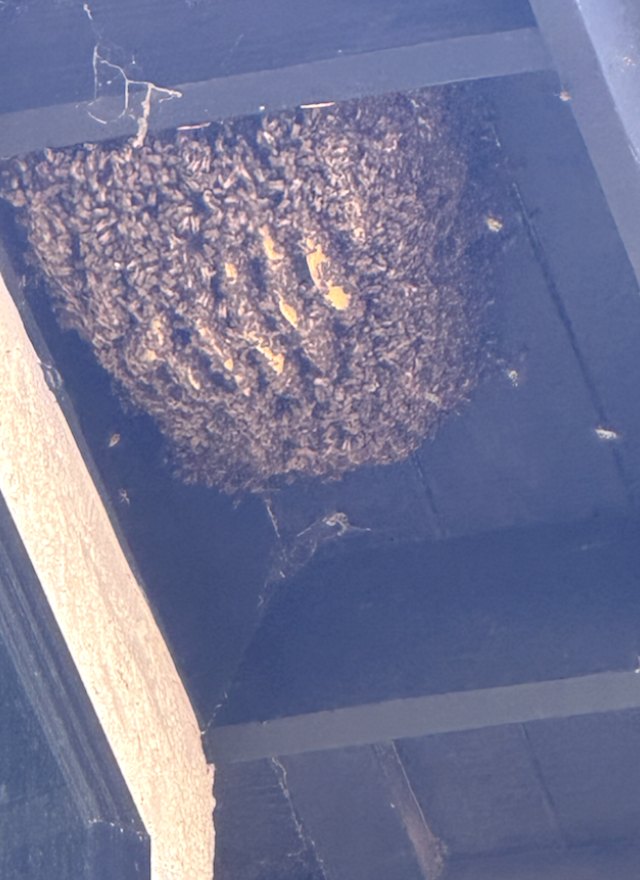
Are the bees inside the wall or just passing through?
A cluster hanging in the open on a branch or fence may be a temporary swarm. When you see bees flying in and out of one opening repeatedly, they may have moved into a wall, soffit, attic, or chimney. The opening tells me where they get in. The comb can be deeper inside the cavity.
Yellowjackets can also enter a wall through a small opening. A video of the traffic and a clear photo from ground level can help me tell which insect you’re dealing with and whether I can help.
What happens during a structural honey bee removal?
The first step is figuring out where the colony and comb are and what it takes to reach them. A cutout is a removal that requires opening part of the structure to get to the colony. The access point might be a section of soffit, siding, or drywall. The right approach depends on what’s behind that surface and who will put it back together.
Where live removal is feasible, the goal is to collect the bees for relocation and remove the comb and stored honey that can be reached. Leftover comb and honey can attract pests or leak into finishes. Before work starts, ask what needs to be opened, what cleanup is included, and who will handle the patching and final sealing. UC Statewide IPM has more on removing established colonies from buildings.
What should I do if bees are coming out of my soffit?
Keep children and pets away from the flight path. Leave the opening alone until the colony is assessed. Spraying or caulking an active entrance can leave comb and honey inside and can push bees toward another opening, including into living space. Skip the ladder and take your photos or video from a safe spot. Read the UC IPM guidance on bees in buildings.
What affects the cost of a bee cutout?
I’ll want to know how high the bees are, what material surrounds the entrance, whether there’s room to work, and whether anyone has already opened or treated the area. An easy-to-reach soffit and a colony deep in a tall wall can require very different work. Ask for a quote that spells out access, removal, cleanup, and any repairs that are handled separately.
What to send me for a Denver-area removal
- Your city or ZIP code and how long you’ve seen bee traffic.
- A wide photo showing the wall or roofline and a short video showing where the bees enter, if you can take one safely.
- The approximate height and whether bees have shown up indoors.
- Any prior spraying, sealing, or repair work at that spot.
See my honey bee removal services or send me the details so we can figure out the next step.